
The Short Answer
Gold is usually better at handling classic financial stress: inflation fear, currency worry, market panic, and the ancient human desire to hold something shiny when the spreadsheet looks cursed.
Bitcoin can handle a different kind of risk: the risk of being locked inside traditional financial rails. It is portable, scarce by design, open 24/7, and can be self-custodied. But it also has a talent for moving like a caffeinated elevator. For beginners, that matters.
So if the question is, "Which one is calmer in a storm?" the answer is usually gold. If the question is, "Which one is a newer, more portable, higher-risk bet on digital scarcity?" the answer is Bitcoin.
The grown-up answer is less dramatic: they protect against different risks, and neither protects against all risks.
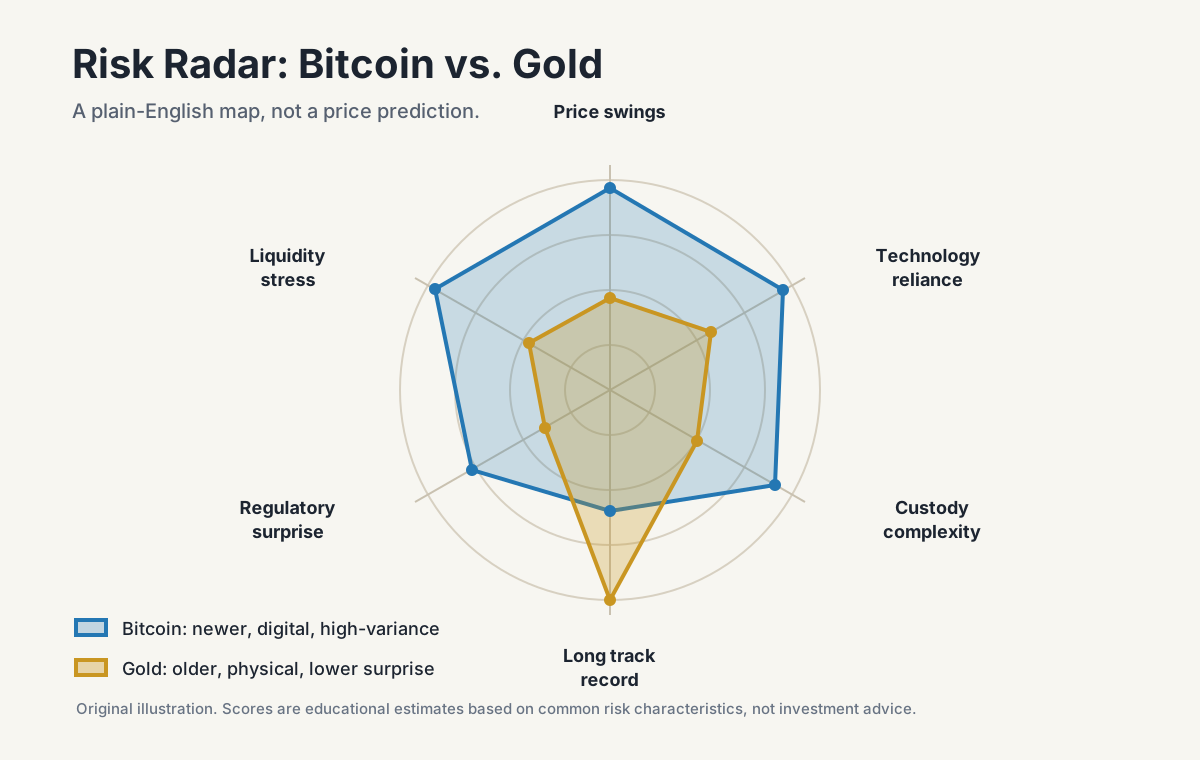
First, What Do We Mean by "Risk"?
Risk is not one monster. It is a whole group chat of annoying problems:
- Price risk: The asset may fall, sometimes a lot.
- Liquidity risk: You may not be able to sell quickly at a fair price.
- Custody risk: You may lose access, get hacked, buy a fake, or store it badly.
- Regulatory risk: Rules may change.
- Inflation risk: Cash may lose purchasing power over time.
- Behavior risk: You may panic-buy high, panic-sell low, and then blame the moon.
The beginner mistake is asking, "Which asset is safe?" A better question is, "Which risk am I trying to reduce, and which new risks am I accepting?"
Gold: The Old Umbrella
Gold has been used as a store of value for thousands of years. It is physically scarce, globally recognized, and not issued by a company, app, bank, or government. Central banks still hold gold as part of official reserves, which tells you something: even serious people in gray rooms have not fully emotionally moved on from shiny metal.
Gold's strengths are easy to understand:
- It has a very long history.
- It is widely recognized across countries and cultures.
- It does not depend on a blockchain, password, exchange, or software wallet.
- It may help diversify a portfolio because it does not always move like stocks or bonds.
But gold is not a superhero. It does not produce income. It can fall in price. Physical gold must be stored, insured, tested, and sold through a dealer who may charge a spread. Gold funds can be easier to trade, but then you own a financial product, not a coin in your hand.
Gold is like an umbrella: useful, boring, and not something you should confuse with a spaceship.
Bitcoin: The Digital Lifeboat With a Bouncy Floor
Bitcoin is a digital asset that runs on a decentralized network. Its supply rules are built into code, and many supporters value it because no central bank can simply create more Bitcoin on demand.
For beginners, the main appeal is simple:
- Bitcoin is scarce by design.
- It can be transferred globally.
- It trades 24/7.
- It can be held without a traditional bank account if you self-custody it.
- It is a bet that digital scarcity will matter more over time.
That is the elegant part. Now the part that bites.
Bitcoin's price has historically been much more volatile than gold. It can rise fast and fall fast. It depends on technology, private keys, exchanges, wallets, and user behavior. If you lose your private key, there may be no "forgot password" button. If you keep coins on a bad platform, you may be trusting more than you realize.
Bitcoin is like a digital lifeboat: potentially powerful, portable, and clever. But if you do not know how it works, you may spend the storm reading the manual upside down.
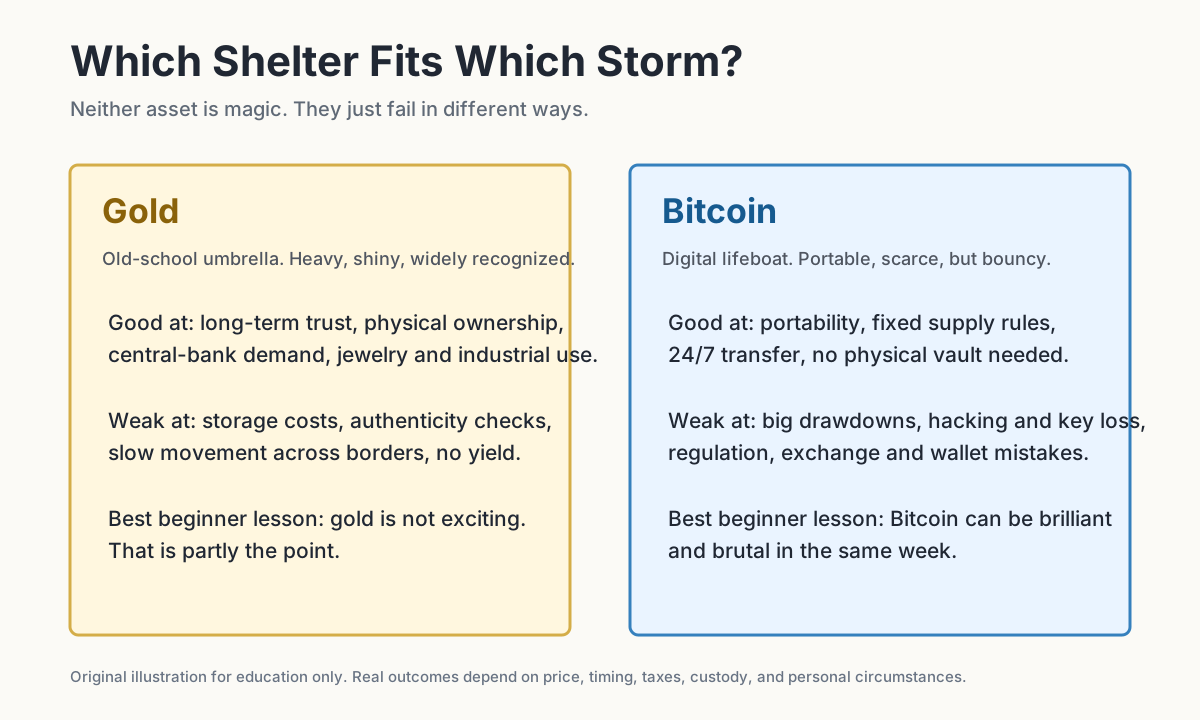
Risk by Risk: Who Looks Stronger?
1. Price Volatility
Gold usually wins.
Gold can be volatile, but Bitcoin has historically had much bigger price swings. For a beginner, this is not a footnote. It is the main event. A 10 percent move in gold is news. A 10 percent move in Bitcoin can feel like Tuesday wearing a fake mustache.
Volatility does not automatically mean "bad." It means the ride is rough. Some investors accept that because they want higher upside. But if a drop would make you panic-sell, your position is probably too large.
2. Inflation Fear
Gold has the longer resume. Bitcoin has the newer argument.
Gold is often viewed as an inflation hedge because its supply is limited and it has a long history as money-like wealth. But gold does not perfectly track inflation every year. It can disappoint for long stretches.
Bitcoin supporters argue that Bitcoin's fixed supply makes it a hedge against money creation. The argument is logical, but the real-world record is shorter and noisier. Bitcoin has also traded like a high-risk asset during some market selloffs.
Translation: gold has the older evidence; Bitcoin has the cleaner theory and the wilder chart.
3. Financial System Dependence
Bitcoin can win, if you know what you are doing.
Physical gold can sit outside the banking system, but moving it is clunky. Bitcoin can be moved across borders more easily, and self-custody can reduce dependence on banks or brokers.
But this only works if custody is done properly. Holding Bitcoin on an exchange is not the same as personally controlling it. Self-custody gives you control, but it also gives you responsibility. That responsibility arrives with steel-toed boots.
4. Liquidity
Both can be liquid, but the details matter.
Major gold products and Bitcoin markets can be highly liquid. Still, liquidity depends on what you own and where you trade. A widely traded gold ETF is different from a collectible coin. Bitcoin on a reputable exchange is different from a tiny token on a suspicious platform with a logo designed in three minutes.
In a crisis, the ability to sell quickly at a fair price may matter more than the label on the asset.
5. Custody and Access
Gold is physically awkward. Bitcoin is digitally unforgiving.
Gold can be stolen, lost, counterfeited, or expensive to store. Bitcoin can be hacked, sent to the wrong address, trapped on a failed platform, or lost forever through key mismanagement.
The core difference:
- With gold, the question is, "Where is it, and is it real?"
- With Bitcoin, the question is, "Who controls the keys, and can they keep controlling them?"
Neither answer should be improvised at midnight after watching a dramatic video online.
6. Regulatory Risk
Gold is more settled. Bitcoin is still evolving.
Gold is familiar to regulators, tax agencies, banks, and markets. Bitcoin is legal in many places, but rules around exchanges, custody, taxation, mining, and financial products continue to change.
In January 2024, the U.S. Securities and Exchange Commission approved spot Bitcoin exchange-traded products, but then-SEC Chair Gary Gensler also warned investors that Bitcoin remained a volatile and speculative asset. That combination is worth noticing: access improved, but risk did not politely leave the building.
The Beginner's Decision Frame
Instead of asking "Bitcoin or gold?" try these three questions.
Question 1: What Risk Are You Actually Afraid Of?
If you are afraid of sudden market crashes, gold may fit the traditional "defensive asset" story better.
If you are afraid of monetary debasement, both assets have scarcity arguments, but gold has the longer track record.
If you are afraid of being locked out of the traditional financial system, Bitcoin may be more relevant, especially if you understand self-custody.
If you are afraid of missing out because your friends made money, please take a walk, drink water, and come back when the drums stop.
Question 2: What Mistake Are You Most Likely to Make?
Different assets punish different mistakes.
Gold punishes you for overpaying spreads, ignoring storage, buying questionable products, or assuming it can never fall.
Bitcoin punishes you for oversized bets, poor custody, scams, exchange risk, forgotten keys, and believing every confident person on the internet.
Your best asset may be the one whose risks you can actually manage.
Question 3: How Much Drama Can Your Plan Survive?
An investment plan should survive ordinary human emotions. If a 30 percent drop would make you sell everything and develop a personal feud with the chart, reduce the position before the chart gets a vote.
For beginners, small position sizing is not cowardice. It is the financial version of learning to swim in the shallow end.
What About Buying Both?
Some investors use both for different reasons. Gold may play the role of old-school diversification. Bitcoin may play the role of a small, high-risk allocation to digital scarcity. This does not mean everyone should own both. It means the two assets are not perfect substitutes.
If you do buy both, keep the job description clear:
- Gold is not there to become a meme-stock rocket.
- Bitcoin is not there to behave like a sleepy savings account.
- Cash is still useful for bills and emergencies.
- Diversification is not a magic spell, but concentration can be a very expensive personality test.
The Five-Minute Risk Check
Before buying either asset, run this quick check.
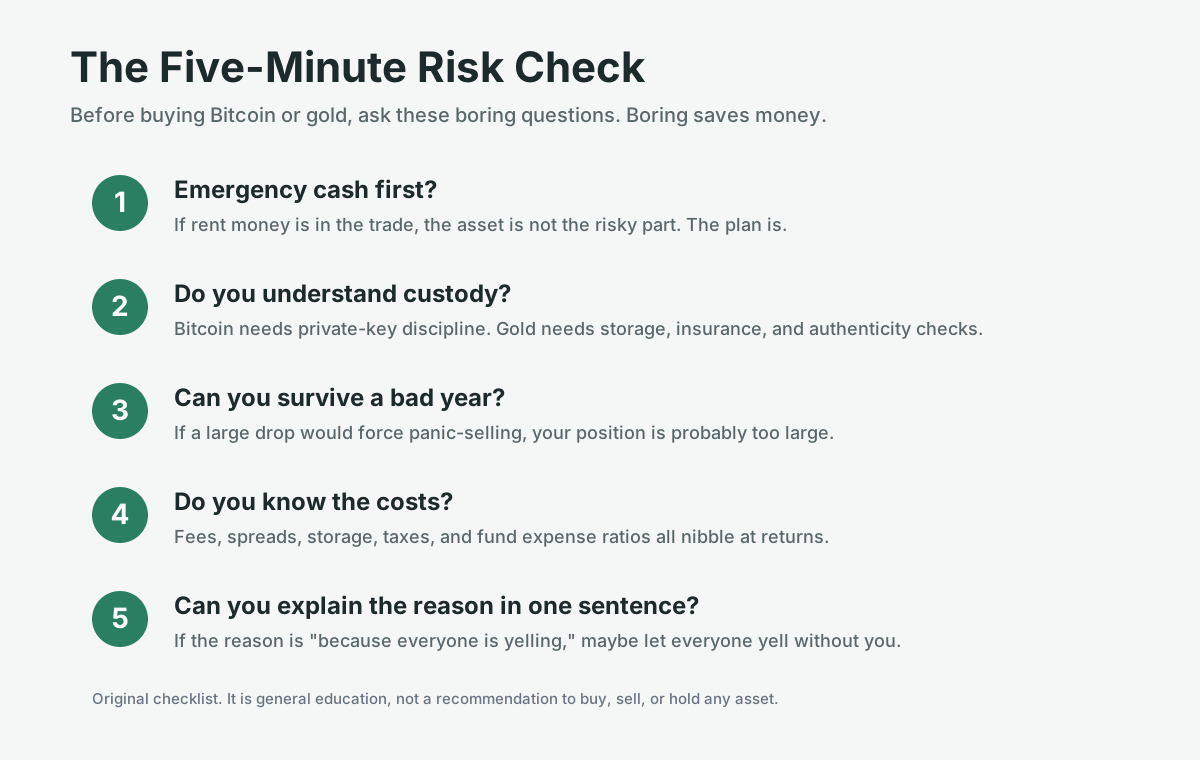
- Emergency cash first? If rent money is in the trade, the asset is not the risky part. The plan is.
- Do you understand custody? Bitcoin needs private-key discipline. Gold needs storage, insurance, and authenticity checks.
- Can you survive a bad year? If a large drop would force panic-selling, your position is probably too large.
- Do you know the costs? Fees, spreads, storage, taxes, and fund expense ratios all nibble at returns.
- Can you explain the reason in one sentence? If the reason is "because everyone is yelling," maybe let everyone yell without you.
So, Who Handles Risk Better?
For most beginners, gold is the more traditional risk-resistant asset. It has a longer history, wider institutional acceptance, and usually lower volatility than Bitcoin.
But Bitcoin may handle certain modern risks better, especially portability, censorship resistance, and independence from traditional intermediaries. Those strengths come with major tradeoffs: volatility, custody complexity, technology risk, and changing regulation.
The cleanest answer:
Gold is generally better for reducing portfolio drama. Bitcoin is generally better for accepting extra drama in exchange for a digital-scarcity thesis.
That does not make gold "good" and Bitcoin "bad." It makes them tools. A hammer and a parachute are both useful, but you should notice which one you are holding before jumping.
Beginner-Friendly Bottom Line
If you are brand new:
- Learn before buying.
- Keep emergency cash separate.
- Avoid leverage.
- Avoid all-or-nothing thinking.
- Treat viral certainty as a warning label.
- Write down your reason, position size, exit rules, and custody plan.
Risk is not just what the market does. Risk is what you do after the market does it.
Sources and Further Reading
- U.S. Securities and Exchange Commission, Investor.gov: Crypto Assets
- U.S. Securities and Exchange Commission, January 10, 2024 statement on spot Bitcoin exchange-traded products: Statement on the Approval of Spot Bitcoin Exchange-Traded Products
- FINRA: Crypto Assets - Risks
- CFTC: Customer Advisory: Understand the Risks of Virtual Currency Trading
- World Gold Council: The relevance of gold as a strategic asset
- U.S. Treasury: Status Report of U.S. Government Gold Reserve
Disclaimer
This article is for educational purposes only and does not provide financial, investment, legal, or tax advice. Bitcoin can be highly volatile and risky. Always do your own research and consult a qualified professional before making financial decisions.