
Bitcoin is exciting. It is also confusing, volatile, technically unforgiving, and often surrounded by people shouting, "This is your last chance!" every three weeks.
So before you buy Bitcoin, here is the real question:
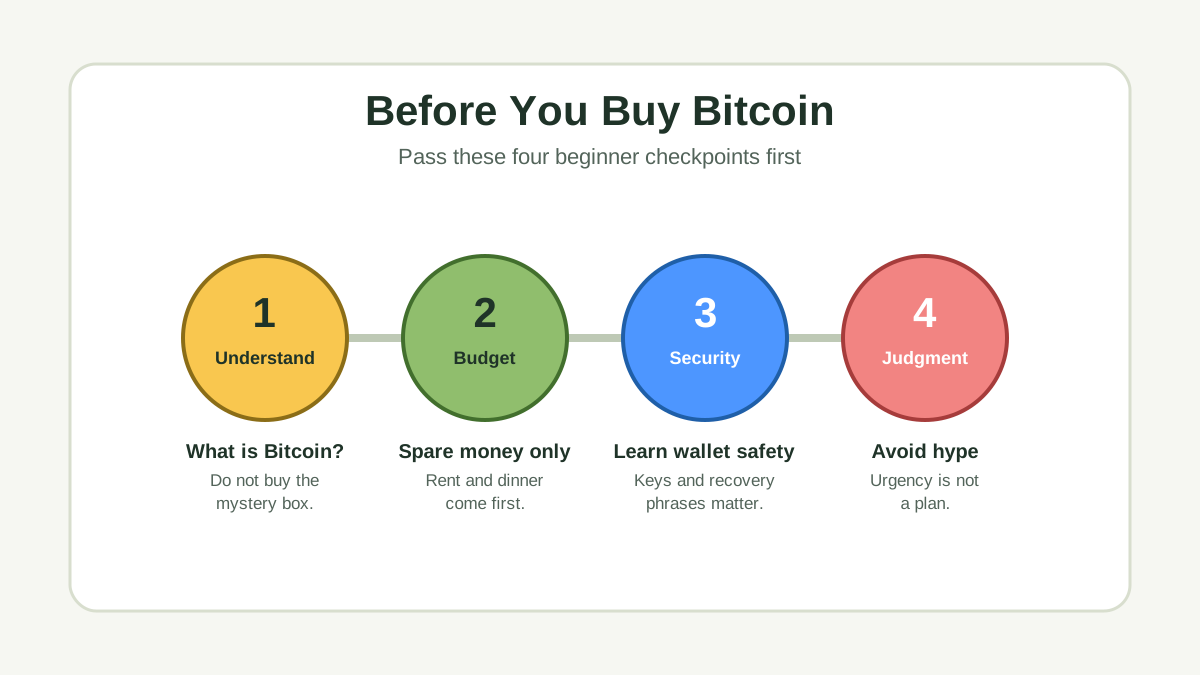
Are you buying it because you understand it, or because the internet made it sound urgent?
This guide is for beginners who want a calm, simple, no-hype way to decide whether Bitcoin belongs in their financial life at all.
Before We Start: This Is Not Financial Advice
This article is for education only. It does not tell you to buy, sell, or hold Bitcoin.
Bitcoin and other crypto assets can be risky and highly volatile. Investor education resources from organizations such as the U.S. SEC's Investor.gov and FINRA warn that crypto assets may involve major price swings, fraud risks, platform risks, custody risks, and the possibility of losing your entire investment.
In plain English: Bitcoin is not a magic money button. It is a high-risk asset that deserves a clear head.
What Is Bitcoin, in Simple Words?
Bitcoin is a digital asset that runs on a decentralized network. No single bank, company, or government operates the whole system. People can send Bitcoin to each other using software called wallets, and transactions are recorded on a public blockchain.
That sounds fancy. Here is the beginner version:
Bitcoin is internet-native money-like technology that you can hold yourself, but you are also responsible for not messing it up.
That second part matters.
Unlike a regular bank transfer or card payment, Bitcoin transactions are generally difficult or impossible to reverse. If you send Bitcoin to the wrong address, lose access to your wallet, or fall for a scam, there may be no friendly "forgot password" button coming to rescue you with a cup of tea.
If you are still thinking, "Okay, but what exactly is Bitcoin, really?" start with our beginner guide here: What Is Bitcoin? A Simple Guide Before You Buy. It explains the basic idea first, so this article will make a lot more sense before you think about spending any money.
Bitcoin May Not Be Right for You If...
Bitcoin might not be a good fit right now if:
- You do not understand what you are buying.
- You need the money for rent, food, bills, tuition, medical costs, or debt payments.
- You panic when prices move sharply.
- You expect guaranteed profits.
- You are buying only because someone online sounded confident.
- You want to trade quickly without learning wallet safety.
- You have not learned how to store it securely.
That does not mean Bitcoin is "bad." It means timing, knowledge, and risk control matter.
A kitchen knife is useful. A kitchen knife in the hands of someone running through a dark room is a documentary waiting to happen.
Mistake 1: Buying Before You Understand What Bitcoin Is
Many beginners buy Bitcoin first and learn later.
This is backwards.
Before putting money in, you should understand the basics:
- What Bitcoin is
- How Bitcoin differs from cash, stocks, and bank deposits
- Why its price can move dramatically
- What a wallet is
- What private keys or recovery phrases are
- What can go wrong when using exchanges or self-custody
- Why scams are common in crypto
The Federal Trade Commission warns that before using or investing in cryptocurrency, consumers should understand how it differs from cash and other payment methods, and how to recognize scams.
You do not need to become a blockchain engineer. You do need enough knowledge to avoid being the person who clicks every shiny button labeled "double your Bitcoin."
A good rule:
If you cannot explain Bitcoin in simple words to a friend, you may not be ready to buy it yet.
Mistake 2: Using Money You Need for Daily Life
This is the big one.
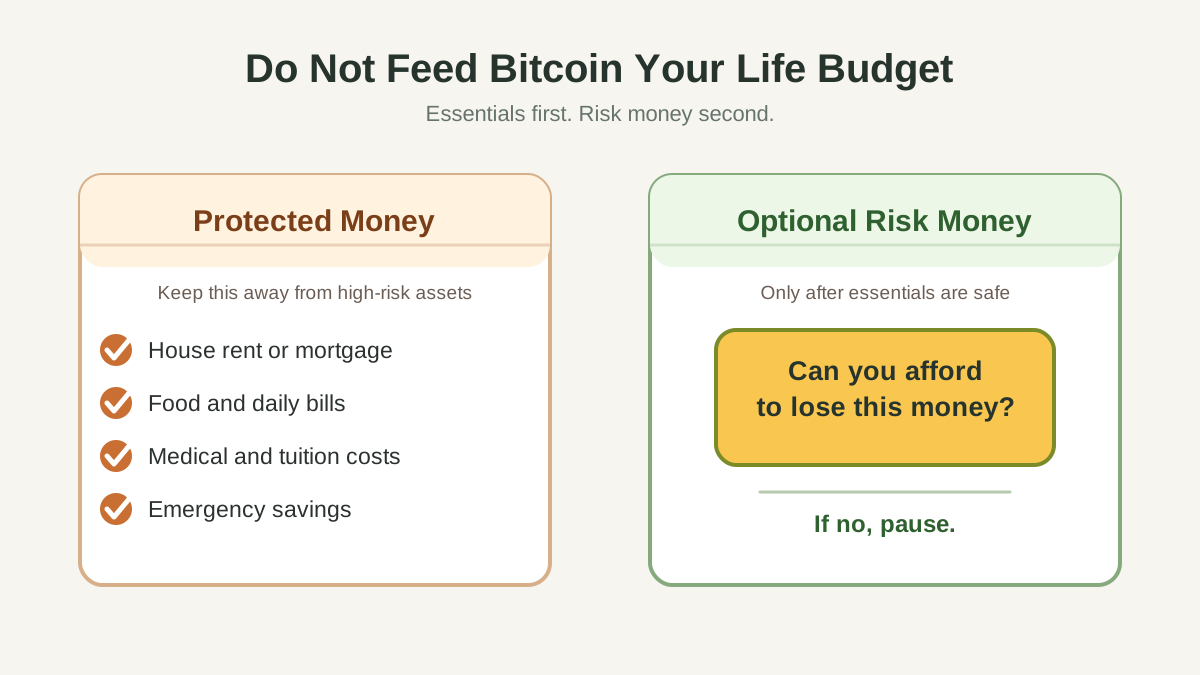
Do not use rent money. Do not use grocery money. Do not use emergency savings. Do not use money you need next month because "it will probably go up by then."
Bitcoin is volatile. Its price can rise quickly, fall quickly, and then stare at you blankly like nothing happened.
FINRA's investor education materials specifically remind investors not to invest more than they can afford to lose. That advice matters even more with crypto assets because price swings can be dramatic and unpredictable.
Before buying, ask yourself:
- Do I have an emergency fund?
- Can I pay all essential bills?
- Am I under pressure from high-interest debt?
- Would a 50% drop seriously hurt me?
- Would losing this money affect my family?
If the answer makes your stomach tighten, pause.
Bitcoin should not compete with dinner.
Mistake 3: Watching the Price but Refusing to Learn the Tools
Some beginners check the Bitcoin price ten times a day but have never practiced sending a small transaction, securing a wallet, or recognizing a fake support message.
That is like staring at the speedometer while ignoring the steering wheel.
Price matters, but operations matter too. If you decide to buy Bitcoin, learn the practical basics:
- How to use a reputable exchange
- How withdrawal fees work
- How to verify wallet addresses
- How to protect account logins
- How two-factor authentication works
- How to back up wallet recovery information
- How to avoid fake apps, fake websites, and fake "customer support"
Investor.gov explains that crypto custody is about how and where you store and access crypto assets, and that wallets are connected to private keys or passcodes. For beginners, that means storage is not a boring technical detail. It is part of the risk.
Bitcoin is not just a price chart. It is also a tool you may need to operate correctly.
Mistake 4: Dreaming of Getting Rich Overnight
Yes, some people made large gains from Bitcoin. That is true.
It is also true that many people bought during hype, panicked during crashes, got scammed, used leverage, lost keys, or sold at the worst possible time.
Both stories exist. The internet tends to show you the sports car story, not the "I lost my recovery phrase during a house move" story.
Be careful with anyone promising:
- Guaranteed returns
- "No risk"
- Secret trading signals
- Urgent buying windows
- Celebrity-style screenshots of profits
- "Send crypto to receive more crypto"
The FTC warns that investment scams often promise easy money, little or no risk, or unusually high returns. In crypto, those promises can spread fast through social media, group chats, dating apps, and fake expert accounts.
Real investing includes uncertainty. Anyone selling certainty is usually selling something else.
Mistake 5: Following the Crowd Without Your Own Judgment
"My cousin bought Bitcoin." "A YouTuber said institutions are coming." "My group chat says this is the bottom." "A person with sunglasses in their profile picture said we are going to the moon."
None of these are an investment plan.
Before buying, form your own view. You can listen to others, but you should not outsource your judgment to them.
Ask yourself:
- Why do I want Bitcoin?
- What role would it play in my finances?
- How much risk can I handle?
- What would make me sell?
- What would make me stop buying?
- Have I read sources that are not trying to sell me something?
Investor.gov notes that fraudsters may impersonate trusted organizations, financial experts, or well-known people online to promote crypto scams. So if your main reason for buying is "someone convincing said so," slow down.
The goal is not to become perfectly certain. The goal is to stop being pushed around by noise.
Mistake 6: Treating Bitcoin Like a Short-Term Stock Trade
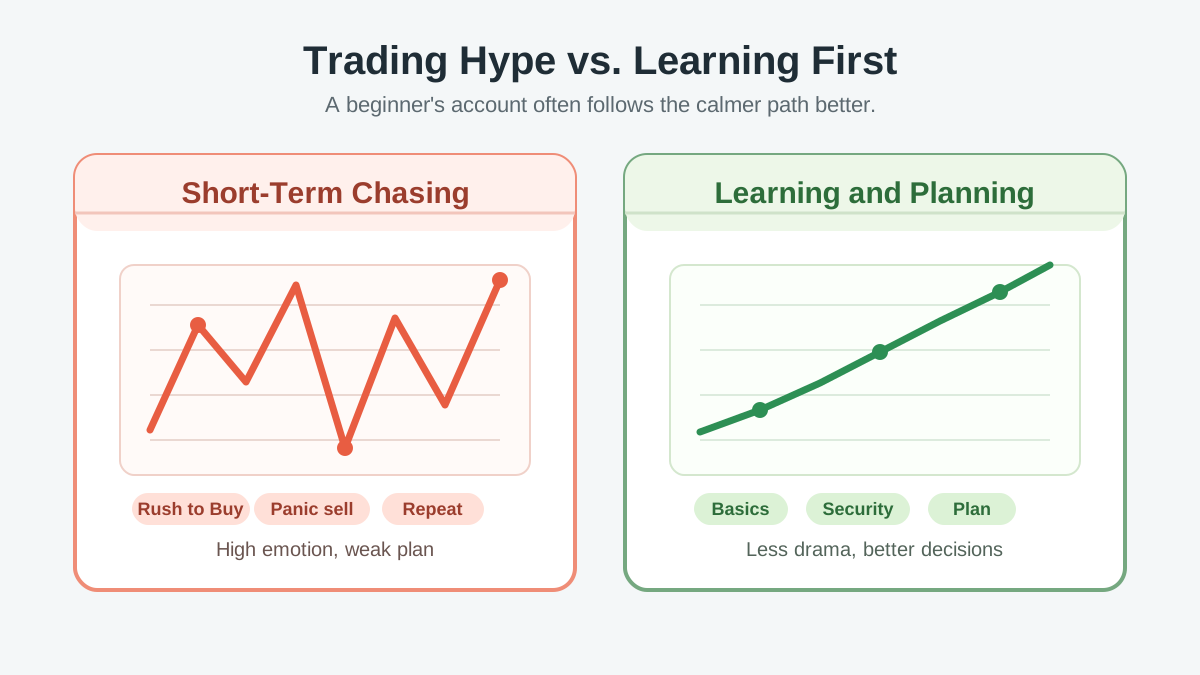
Some beginners jump in and out of Bitcoin like they are day-trading a hot stock. They buy after a pump, sell after a dip, then repeat until their account looks like it has been through a blender.
Bitcoin trades 24/7. There is no closing bell. The market can move while you sleep, eat, work, or finally decide to act like a normal human for six minutes.
Short-term trading is difficult. Fees, taxes, emotional decisions, volatility, scams, and poor timing can all work against beginners.
If you are new, consider whether your real goal is:
- Long-term learning and cautious exposure
- Short-term speculation
- Gambling with extra steps
Be honest. Your wallet already knows.
Mistake 7: Buying Before Learning How to Store It Safely
This is one of the most important beginner mistakes.
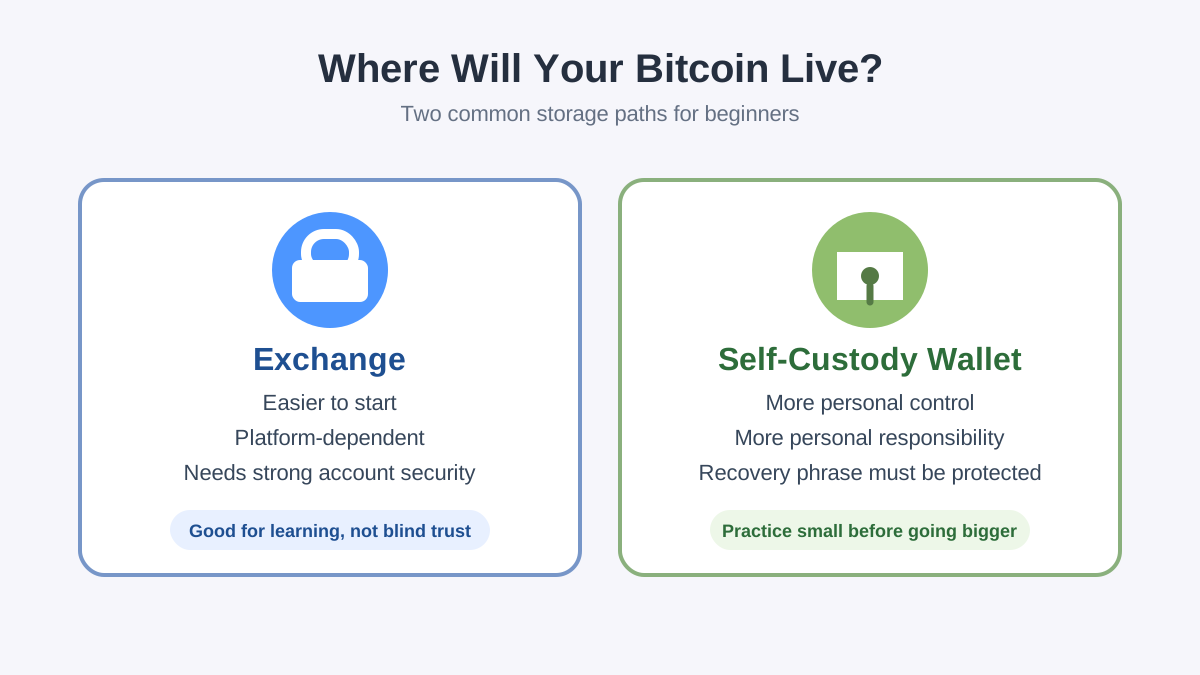
People usually hold Bitcoin in two broad ways.
Holding Bitcoin on an Exchange
This is simpler, but you depend on the platform. If your account is hacked, the platform freezes withdrawals, or the company has financial or legal problems, you may face serious risk.
Use strong passwords, two-factor authentication, withdrawal allowlists if available, and be alert for phishing.
FINRA warns that theft is a significant risk in crypto assets, and that some service providers may be better than others at protecting against cybersecurity risks.
Holding Bitcoin in Your Own Wallet
This gives you more control, but also more responsibility. If you lose your recovery phrase or private keys, you may lose access permanently.
Self-custody is powerful, but it is not magic. It is more like owning a safe where the lock cannot be replaced if you forget the combination.
Before moving meaningful amounts, learn with tiny amounts first.
A Simple Readiness Checklist
You may be more ready to buy Bitcoin if you can say "yes" to most of these:
- I understand Bitcoin is risky and volatile.
- I am not using money needed for daily life.
- I do not expect guaranteed profits.
- I know how common crypto scams work.
- I understand the difference between an exchange and a personal wallet.
- I know how to protect passwords, two-factor authentication, and recovery phrases.
- I have a plan instead of reacting to every price move.
- I am willing to keep learning after buying.
If you cannot check these boxes yet, that is fine.
Waiting is not failure. Sometimes the smartest first Bitcoin move is not buying Bitcoin. It is learning enough to avoid a very expensive lesson.
So, Should You Buy Bitcoin?
Maybe. Maybe not yet.
Bitcoin may be suitable for some people as a small, high-risk part of a broader financial plan. It may be unsuitable for people who need stability, cannot tolerate losses, or have not learned basic security.
The best beginner approach is boring in a good way:
Learn first. Use only money you can afford to lose. Avoid hype. Protect your wallet. Think for yourself.
Bitcoin will still be there after you finish learning the basics.
And if someone tells you that you must buy immediately or miss out forever, take a breath. Urgency is great for pizza delivery. It is not a financial plan.
Sources and Further Reading
- SEC Investor.gov: Crypto Assets
- FINRA: Crypto Assets - Risks
- FTC: What To Know About Cryptocurrency and Scams
- FTC: Investment Scams
- CFPB: Complaint Bulletin - Crypto Assets
Disclaimer
This article is for educational purposes only and does not provide financial, investment, legal, or tax advice. Bitcoin can be highly volatile and risky. Always do your own research and consult a qualified professional before making financial decisions.