
Note: Sources are used for educational context. This article does not provide financial, tax, or legal advice.
Quick Note Before We Start
This article is for beginners who are curious about Bitcoin but do not want to be buried under financial jargon. Bitcoin can rise quickly, fall sharply, and make very smart people stare at charts like they are trying to decode ancient runes.
Before putting money into Bitcoin, whether through an ETF or direct ownership, think about your goals, risk tolerance, time horizon, and whether losing money would hurt your real life.
The Tiny Version
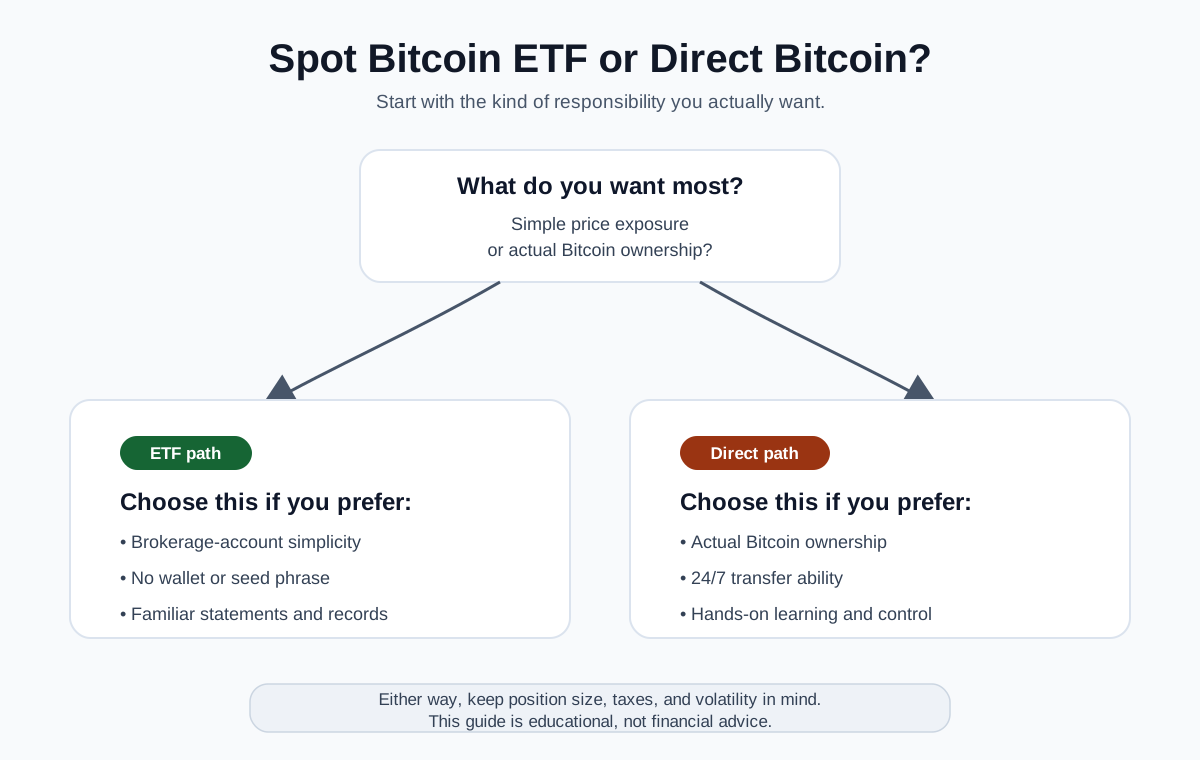
If you want simple Bitcoin price exposure inside a normal brokerage account, a spot Bitcoin ETF may feel easier.
If you want to actually own Bitcoin, move it, store it, and learn how the Bitcoin network works, buying Bitcoin directly may be the better fit.
Neither choice is automatically "better." They are different tools. A spot Bitcoin ETF is like taking a taxi. Buying Bitcoin directly is like owning the car, holding the keys, and remembering where you parked.
First, What Is an ETF?
ETF stands for exchange-traded fund. That sounds fancy, but the idea is friendlier than the name. An ETF is like a basket you can buy through a regular brokerage account. Instead of buying every apple, orange, and banana one by one, you buy one basket that is designed to represent what is inside it. ETFs trade on stock exchanges, so investors can usually buy and sell them during the trading day, similar to stocks.[1]
In a spot Bitcoin ETF, the "basket" is built to give you exposure to Bitcoin's price. You are not carrying Bitcoin around in your own digital wallet. You are buying shares of a fund that tries to follow Bitcoin. Think of it as watching the roller coaster from a seat with a safety bar, not climbing into the engine room with a wrench.
A spot Bitcoin ETF is a fund that trades on a stock exchange and is designed to track the price of Bitcoin. You buy and sell shares of the ETF through a brokerage account, much like you would buy a stock or a traditional ETF.[1]
The important part: you do not personally hold Bitcoin. You own shares of a fund that gives you exposure to Bitcoin's price.
What Does Buying Bitcoin Directly Mean?
Buying Bitcoin directly means you purchase actual Bitcoin through a crypto platform, broker, or other service. After buying, you may leave it on the platform or move it to your own wallet.
That second part matters. If you move Bitcoin to your own wallet, you are responsible for protecting your private keys or seed phrase. That can be empowering, but it also means there may be no easy "forgot password" button if something goes wrong.
The Main Difference
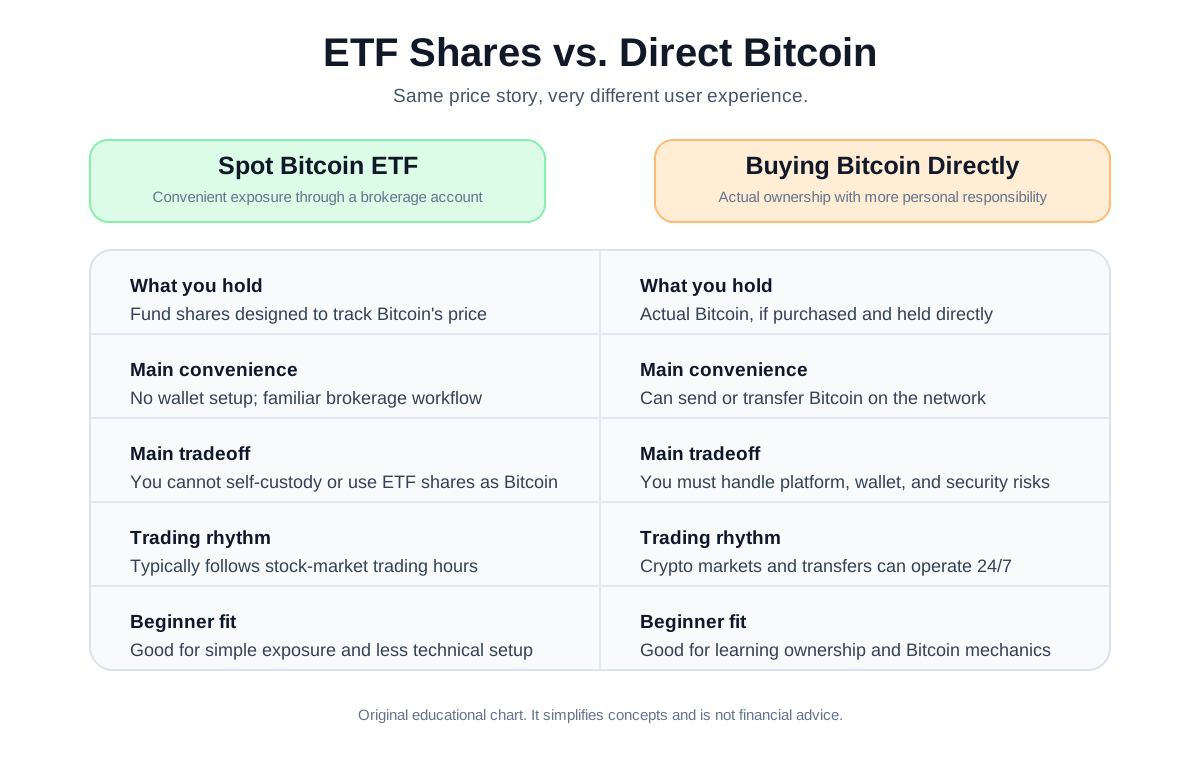
A spot Bitcoin ETF gives you exposure to Bitcoin's price.
Buying Bitcoin directly gives you actual Bitcoin.
That may sound like a tiny difference, but it changes a lot: convenience, control, responsibility, fees, tax recordkeeping, and security.
Spot Bitcoin ETF: The Beginner-Friendly Door
A spot Bitcoin ETF may suit beginners who want fewer moving parts. You do not need to create a crypto wallet, write down a seed phrase, or worry about sending Bitcoin to the wrong address.
For many people, that simplicity is the big attraction. You can use familiar brokerage tools, review fund information, and keep the investment alongside other traditional assets.
Benefits of a Spot Bitcoin ETF
1. Easier Access
If you already have a brokerage account, buying a Bitcoin ETF may feel familiar. You search for the ticker, review the fund details, place an order, and monitor it like other exchange-traded products.[1]
2. No Wallet Management
You do not personally manage Bitcoin private keys. That removes one of the biggest beginner risks: losing access to your own coins.
3. Familiar Account Records
Brokerage platforms usually provide account statements, trade confirmations, and tax documents in formats many investors already understand.
4. Easier Fit With Traditional Investing
Some investors prefer products that can sit inside a regular brokerage account. For them, a spot Bitcoin ETF may feel less intimidating than opening a crypto account and learning wallet security from scratch.
Drawbacks of a Spot Bitcoin ETF
1. You Do Not Own Bitcoin Directly
ETF shares are not the same as Bitcoin. You cannot send ETF shares to a Bitcoin wallet, use them on the Bitcoin network, or self-custody them.
2. Fund Fees
ETFs usually charge fees, often called expense ratios. These costs may look small, but they can add up over time.
3. Market-Hours Trading
Bitcoin trades around the clock, but ETFs generally trade during stock market hours. If Bitcoin moves sharply on a weekend, your ETF trade may have to wait until the market opens.
4. Tracking Differences
A spot Bitcoin ETF is designed to track Bitcoin's price, but the ETF share price may not match Bitcoin perfectly at every moment because of fees, spreads, premiums, discounts, or market conditions.
Buying Bitcoin Directly: The "I Want the Real Thing" Route
Buying Bitcoin directly may suit people who want to understand Bitcoin itself, not just its market price.
This path gives you more control, but also more responsibility. It is a bit like cooking at home instead of ordering delivery. You get more control over the meal, but yes, you also have to clean the pan.
Benefits of Buying Bitcoin Directly
1. Actual Ownership
When you buy Bitcoin directly, you can own actual Bitcoin. If you move it to your own wallet, you control the asset yourself.
2. 24/7 Market Access
Crypto markets operate continuously. Bitcoin can usually be bought, sold, or transferred at any time, including weekends and holidays.
3. Use on the Bitcoin Network
Directly owned Bitcoin can be sent to another Bitcoin address. ETF shares cannot.
4. Better Learning Experience
Direct ownership can teach beginners how Bitcoin actually works: wallets, addresses, transactions, confirmations, network fees, and self-custody.
Drawbacks of Buying Bitcoin Directly
1. Security Responsibility
If you self-custody Bitcoin, you are responsible for protecting your private keys or seed phrase. If you lose access, recovery may be impossible.
2. Platform Risk
Crypto trading platforms may not offer the same investor protections as regulated securities markets. FINRA notes that many crypto trading platforms "aren't registered with the SEC."[4]
3. Transaction Mistakes Can Be Final
If you send Bitcoin to the wrong address, the transaction may not be reversible. This is one reason beginners should move slowly and double-check everything.
4. Tax Recordkeeping Can Get Complicated
Buying, selling, exchanging, or using digital assets may create tax reporting obligations. The IRS says, "You may have to report transactions with digital assets."[3]
Risk Check: Bitcoin Is Still Bitcoin
A spot Bitcoin ETF does not turn Bitcoin into a savings account. Buying Bitcoin directly does not turn it into guaranteed treasure. Either way, you are still exposed to Bitcoin's price volatility.
Bitcoin can move sharply up or down. It may not be appropriate for money you need for rent, bills, tuition, medical costs, emergency savings, or anything that would make your future self say, "Why did we do that?"
When the SEC approved spot Bitcoin exchange-traded products in January 2024, it made clear that approval of those products was not an endorsement of Bitcoin itself. SEC Chair Gary Gensler stated, "we did not approve or endorse bitcoin."[2]
Which One May Fit You Better?
A Spot Bitcoin ETF May Fit You If...
You want Bitcoin price exposure without managing wallets.
You already use a brokerage account.
You prefer familiar statements, trading tools, and account records.
You do not plan to send, spend, or self-custody Bitcoin.
You want the experience to feel more like buying a traditional ETF than learning a new financial operating system.
Buying Bitcoin Directly May Fit You If...
You want actual Bitcoin, not fund shares.
You are willing to learn wallet safety.
You understand that self-custody gives you control and responsibility.
You want to use Bitcoin on the Bitcoin network.
You are comfortable keeping careful records for taxes and security.
A Simple Analogy
A spot Bitcoin ETF is like buying a ticket that follows the price of coffee beans.
Buying Bitcoin directly is like bringing home the bag of beans.
With the ticket, you do not need a grinder, storage jar, or kitchen cleanup. With the beans, you can actually make coffee. But if you spill them, that is your problem.
Beginner Safety Checklist
Before choosing either route, ask yourself:
- Can I afford to lose this money?
- Do I understand what I am buying?
- Have I checked the ETF's fees or the crypto platform's costs?
- Do I understand the tax basics?
- Am I using strong passwords and two-factor authentication?
- Am I avoiding hype, "guaranteed returns," celebrity promotions, and urgent countdown timers?
If an investment pitch makes you feel like you must act immediately, take a breath. Good decisions usually survive a cup of tea.
Final Answer
For many pure beginners who only want simple Bitcoin price exposure, a spot Bitcoin ETF may be the easier starting point.
For beginners who want to truly own Bitcoin and learn how the Bitcoin network works, buying Bitcoin directly may be more meaningful, but it requires more responsibility.
The key question is not "Which one is cooler?" It is this:
Do you want convenient exposure, or do you want actual ownership?
Once you know that, the choice becomes much less mysterious.
References
1. U.S. Securities and Exchange Commission, Investor.gov. Exchange-Traded Funds. Accessed May 14, 2026. https://www.investor.gov/introduction-investing/investing-basics/investment-products/mutual-funds-and-exchange-traded-2
2. U.S. Securities and Exchange Commission. Statement on the Approval of Spot Bitcoin Exchange-Traded Products. January 10, 2024. https://www.sec.gov/newsroom/speeches-statements/gensler-statement-spot-bitcoin-011023
3. Internal Revenue Service. Digital Assets. Accessed May 14, 2026. https://www.irs.gov/businesses/small-businesses-self-employed/digital-assets
4. FINRA. Crypto Assets. Accessed May 14, 2026. https://www.finra.org/investors/investing/investment-products/crypto-assets